Structure your teams for the work AI is about to change.
Operating models for technology and business teams, designed around products, platforms and AI agents.
One call with a senior engineer. A straight answer on what it would take.
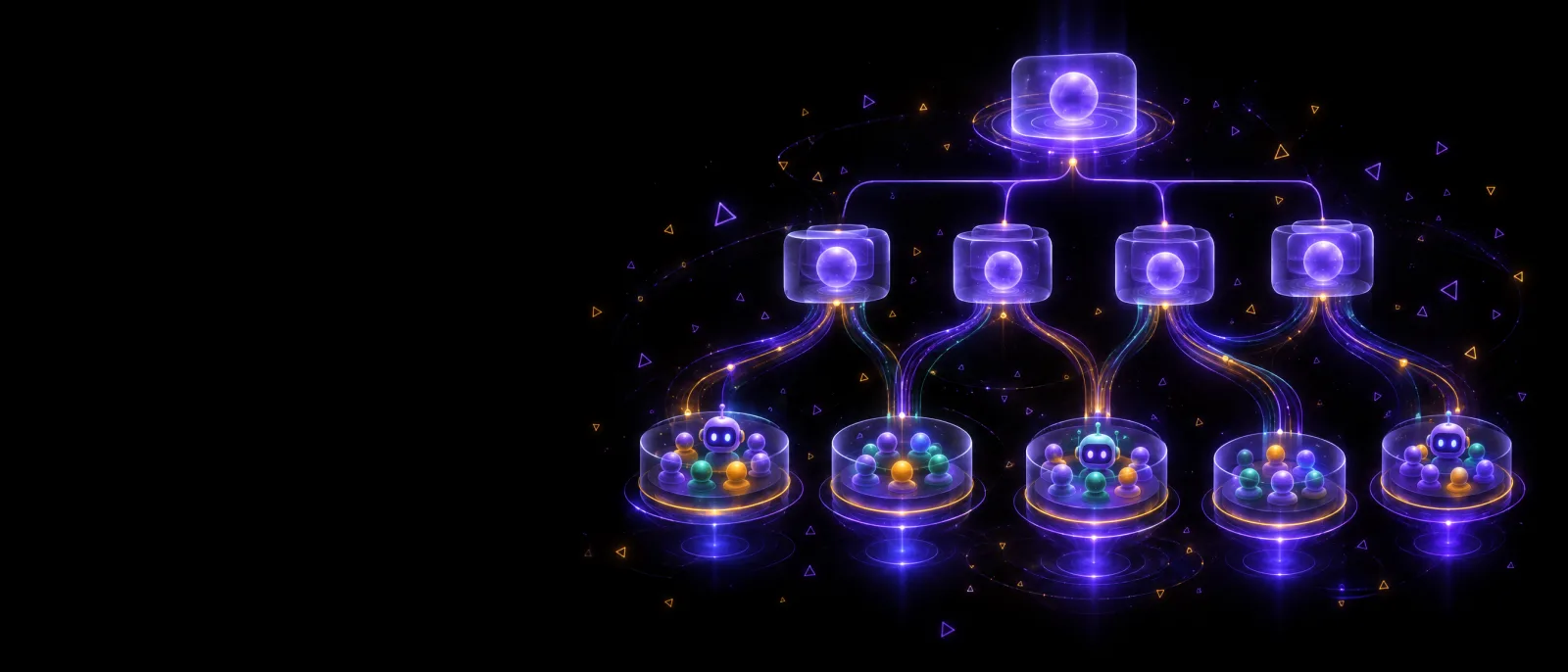
Where you are. Where you’ll be.
You need this if
- Work passes through many teams before it's done
- IT is seen as an order-taker, not a partner
- Nobody knows how roles change as AI scales
What changes for your business
- Clear ownership of products and outcomes
- Faster decisions with fewer handoffs
- An organization ready to work alongside AI agents
What we hand over
- Current operating model diagnostic
- Target model: teams, roles, funding and governance
- Transition plan and change support
- Operating metrics and review cadence
What it is
An operating model describes how an organization is structured, funded and governed to deliver its work, who owns what, and how decisions flow. Technology operating models are being redesigned as AI agents take on routine work, making structures built around manual handoffs slower than they need to be.
As agents take on routine work, team structures built around manual processes stop making sense. We redesign how technology and business teams are organized, funded and governed, moving toward product and platform teams with clear ownership, and plan the transition so delivery doesn't stall during the change.
- Why now
- 70% of digital transformations fall short of their objectives. BCG, 2020 (opens in a new tab)
- Last reviewed
How it runs
- 01
Diagnose
Typically 2–4 weeksWe map the problem, your data and your systems, and agree the one number that defines success.
- 02
Prove
Typically 4–8 weeksA working pilot on your real data, measured against that number. Not a slide demo.
- 03
Ship
Scoped to the outcomeProduction build with security, monitoring, cost controls and documentation included, not upsold.
- 04
Run
Ongoing, optionalWe operate what we built against clear service levels, or train your team to. Your call. No lock-in.
Questions you’ll ask
- Why change our operating model because of AI?
- Team structures built around manual handoffs stop making sense when agents handle the routine steps. Without redesign, AI gets bolted onto old workflows and the expected savings never show up.
- What is a product and platform operating model?
- Long-lived teams that own a product or platform end to end, funded by outcome rather than by project, with platform teams providing shared capabilities. Work stops passing through many hands before it's done.
- How do you avoid stalling delivery during a reorganization?
- By changing in stages, starting with one or two value streams, keeping delivery commitments visible throughout, and moving people with their knowledge instead of resetting teams.
Sound familiar? Let’s fix it.
One call with a senior engineer. You’ll leave with a straight answer on what it would take.
Let's Build Together